
In the last post here, I argued that, water-wise, the Colorado River region is no longer in a ‘water crisis’ – a term implying a situation where some changes and adjustments need to be made ‘to get back to normal.’ No. We will never get back to the 20th century Colorado River ‘normal’ – the seemingly successful operation of our vast water storage-and-distribution system we experienced from the 1970s through the 1990s, providing some or all of the water and food and power for 30, 35, 40 million people.
Instead, I suggested we should take seriously a United Nations University study declaring that the whole planet is in state of Global Water Bankruptcy: Living Beyond our Hydrological Means in the Post-Crisis Era. The scientist-authors used the current Colorado River situation as one of their examples of ‘global water bankruptcy.’ This water bankruptcy, here as everywhere else on the planet, is due to two ‘universal’ factors:
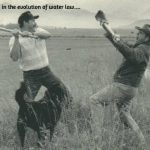
– One factor is the extent to which we humans have become a swarming species on the planet, overwhelming the planet’s capacity to supply our expanding needs along with the rest of the planet’s ‘life project.’ Our more sophisticated water ‘needs’ exacerbate our physical numbers in creating the bankruptcy. (See cartoon above)
– The other factor is a planet growing steadily warmer for the foreseeable future, resulting in a general ‘drying out’ and diminished water supply in the tropical and so-called temperate zones where most of the planet’s life and food production happen.
The current systems for water management and operation around the world cannot – repeat: cannot – continue to pretend to meet the relentlessly increasing demand with the relentlessly shrinking water supply.
Those are therefore bankrupt systems, in their current state. That does not mean the systems must be terminated, but it does mean there will have to be major changes in the systems if they are ever again going to sustainably meet the needs of the people.
The first stage of bankruptcy management is the formalization of old cowboy wisdom; if you’ve dug yourself into a hole, the first thing to do is to stop digging. On the global level, this would mean stop having so many babies that survive infancy to become eating, drinking, coupling adults – or more the case today, perhaps, lifelong vaguely angry adolescents (eating, drinking and coupling). The most developed nations have in fact made inroads on this challenge, achieving (with no formal program) zero or even negative birth-to-death ratios; their population increases are mostly through immigration.
But that’s global, the first and oldest species-level problem, the trauma of success we’ve been grappling with for 6,000 years plus or minus: how to organize the swarming population for something other than the ultimate decline and fall into following some Ozymandias or Trump off a cliff.
For now, let’s just bring it home to the Colorado River region. (‘Region’ here, remember, means the natural river basin plus all of the out-of-basin extensions who depend on Colorado River diversions – the South Platte and Arkansas River Basins, the Salt Lake basin, Southern California out to the Pacific coast.)
The Bureau of Reclamation has, as discussed in the last post, taken the lead in ‘stopping digging’ by essentially ignoring the antiquated Colorado River Compact and mapping out an ‘adaptive management’ agenda of a ten-year plan broken into five reviewable and alterable two-year periods.
The Bureau’s chief goal in this ten-year plan is not delivering an easy and comfortable desert lifestyle for the 40 million or so people who depend on the river for some or all of their water, food, energy and water-based entertainments. Their chief goal for the next decade is to save the system of water storage and distribution that has been stretched to the breaking point through enabling that lifestyle for a possibly unsustainable number of people, and the people will have to pay for that effort to save the system over the coming decade – and quite probably live with reasonably diminished expectations on into the future, for so long as we continue shrinking the river through pumping ever more heat-trapping gases in the atmosphere.
How will we pay? Tiered water bills will probably make it unaffordable for most of us to maintain a desert-defying green lawn. Unavoidable major cuts to agricultural water will introduce change and some chaos in the food supply systems, guaranteeing continued high or higher prices at the supermarket. It may make 50-plus percent of ag water going to animal food production (hay and corn) economically unsustainable; meat may eventually go back to being a special Sunday treat. The need to increase storage in reasonably good water years will mean cheap hydropower production will continue to be replaced by more expensive alternatives – wind and solar as they develop, but when necessary a fallback on fossil fuels (meaning more planet-warming gases into the atmosphere). The need to increase storage in good years will also mean marginal flows in all the ‘recreational canyons’ below the major dams, now a significant element in the basin economy. (This year the recreational economy took a big hit as many streams dropped below the level for safe boating or fishing.)
The Bureau wants consumptive use of Colorado River water to have been permanently cut by 3 million acre-feet (maf) not later than the end of the 10-year planning period (2036), on the valid assumption that ever lower snowpacks and runoffs are the shape of the future; that reduction in use will, they believe, allow them to build up some storage in the good years for sustainability through the bad years – the basic idea of storage.
The cuts to go in effect October 1 (beginning of the 2027-28 first two-year Bureau plan) will achieve between a third and half of the 3 maf through mandatory cuts totaling 1.25 maf for the three Lower Basin states below the big federal reservoirs (California, Arizona and Nevada), and a program of voluntary paid reductions in Upper Basin use, paid from a $100 million fedeal fund. Users can expect that the other half of the consumptive use reduction will be worked in to the two-year reviews and subsequent modified plans for the next two years.
The reaction to this plan has – as one might expect – not been positive. The state of Nevada has sued the Bureau/Interior for the depth of the current cuts and the promise of deeper. The Central Arizona Project governing board has also decided to sue, because the CAP will take the deepest cuts, due to the junior status of its water rights.
The state of Arizona also threatened to sue in a letter to the Bureau; they castigated the Bureau’s plan for seeming to pay no obeisance to the Colorado River Compact, and are essentially demanding that the Bureau continue to release 8.23 maf on average from Powell to meet the Upper Basin Compact obligation, even if it means Upper Basin users having to cut their uses to accumulate that hydrologically antiquated quantity. They have created a multi-million dollar war chest and have hired a law firm to defend their state of denial.
California has been mostly quiet; they will only stir from their den if someone suggests that the cuts should be divided among the three states equitably according to each state’s usage of the waters, rather than distributed through appropriations priorities.
The lack of mandatory Upper Basin cuts in the plan is a very sore point with the Lower Basin users. The Upper Basin states answer by saying that nature already imposed major reductions on their use – reductions that are not really quantified, however. It is important to acknowledge a major distinction between the two Basins: nearly all the lower Basin water users are below the big federal storage reservoirs, while many, maybe most of the Upper Basin water users are above the larger federal storage reservoirs. Living and working above a dam versus below a dam develops different perspectives on things like predictability, sustainability and freedom to act.
There is actually not a great quantity of private consumptive use in the Upper Basin that is ‘controlled’ by federal reservoirs, which can impose cuts by simply not releasing water from the reservoirs – how the Bureau will be enforcing its mandatory cuts in the Lower Basin. Also the upstream Upper Basin federal reservoirs like Green Mountain and Taylor are all on the small side (less than 150,000 acre-feet). Many of the Upper Basin agricultural diversions are also small, with numerous single-ranch headgates – too much to cover for overworked water commissioners with too-large sectors; they have to accept that a lot of the recording of use will be done by the farmers and ranchers themselves, an honor system that does not always insure accuracy.
Even the paid voluntary cuts face a challenge; to get the water saved by upstream users down to Powell Reservoir, it must be ‘shepherded’ past downstream users who are free to take the water to meet their own allotments, and no one knows how this shepherding can be done. A legal system based on ‘first come, first served’ does not automatically encourage a sharing attitude.
So that is where it stands today. I think it has to be acknowledged that the Bureau of Reclamation is trying to instill a ‘bankruptcy awareness’ over a region of heavily invested consumptive water users that are steeped in denial over a water situation they seem to feel they cannot afford to acknowledge.
That the Bureau of Reclamation was a moving force pushing the over-development of the river system through the first three quarters of the 20th century cannot be denied; if ‘arrogance’ can be defined as large actions taken in a state of ignorance about outcomes (suggesting that smaller trial runs would have been wiser), then the Bureau has been arrogant, culminating probably in Glen Canyon Dam. Basically 20th-century America became arrogant after World War II; the Bureau was just another running dog.
America right now is insufferably arrogant in its behavior globally, trying to make ongoing ignorance mandatory in the face of sadder-but-wiser awareness (‘wokeness’), in order to try to perpetrate large actions done stupidly; make America grate again. But the Bureau, viewing the imminent reduction of its massive Colorado River achievement to a dead-pool joke, has more humbly come around to a ten-year flexible and resilient plan to reduce water use in the Basin (plus extensions) to fit the Colorado River we now have, not the river we thought we had when we drafted a compact dividing the river among the seven states supposedly united by the river.
This is the Bureau’s attempt to move to bankruptcy management, and it has resulted to date in a flurry of lawsuits and threats, which must presumably be dealt with before what needs to be done can be done. History suggests that this could take up to a decade once it is submerged in the courts, and the Bureau managers are convinced that a prolonged period of ‘no action’ (the first alternative in all EIS-driven decisions) will inevitably result in dead-pool episodes in Powell and Mead Reservoirs. Recent history, on the other hand, suggests that the Supremes (to whom interstates disagreements go) are no longer interested in careful constitutionally-based jurisprudence if it doesn’t suit their politics, so they might let the Bureau go ahead with its escalating cuts to the Lower Basin while a water master thrashes through the legal thicket.
We’ll see. Meanwhile, next time I want to start looking at some ideas that might help lead out of our current bankruptcy….
Leave a Reply
Recent Posts
- Romancing the River – Moving toward Bankruptcy Management
 In the last post here, I argued that, water-wise, the Colorado River region is no longer in a ‘water crisis’ – a term implying a situation where some changes and adjustments need to be made ‘to get back to normal.’ No. We will never get back to the 20th century Colorado River ‘normal’ – the ... Read More
 - Romancing the River: Bankruptcy in the Slough of Despond
 You may remember my mention in early February of a research paper from scientists at the United Nation University Institute of Water, Environment and Health, titled Global Water Bankruptcy: Living Beyond our Hydrological Means in the Post-Crisis Era. The report begins: ‘Amid chronic groundwater depletion, water overallocation, land and soil degradation, deforestation, and pollution, all ... Read More
 - Romancing the River: Let us gather by the river….
 Every so often it just seems like a good idea to drop out of the wrangling over the future of water in the arid west and – just go down to the river itself. A good friend abetted this by taking me along on a float down the lower Gorge of the Gunnison River. My ... Read More
 - Romancing the River – Another Elephant to Ignore
 Last post here, I suggested that at least some of the ongoing failure of the seven Colorado River states to reach agreement on a river management plan for even the next several years, let alone new century, stems from some ‘elephants in the river.’ You know – the big things that nobody wants to look ... Read More
I’m not a scientist, nor a Christian or athiest. I readily admit that my opinions on the subject of water bankruptcy are mostly intuitive by nature because, if I am anything other than just a part of infinite divine consciousness, I am an artist.
My fist suggestion to stop this crisis is to stop trying to fix it. It got fucked beyond all repair because humans tried to fix it before it got all fucked up. So maybe we need to let go of it as a first step.
Maybe we need to wake up to who we really are – inseparable units of divine consciousness. We are all one being playing out the infinity if options of aliveness. We don’t need to DO anything other than just be.
We live within and as part of infinite energy that cannot be destroyed. We actually exist at a very unique and special point in the historical trajectory of Earth. We unfortunately live as slaves to a few beings who have enormous evil intended investment in the false concept of separation. This is what we need to awaken from and to. Technologies exist to provide us with pure, clean, boundless energy to keep our limited temperature tolerances on an even keel. We have technologies of propulsion that we could utilize to transport ourselves anywhere in the universe in essentially no time at all. We have capabilities for food production where we could have limitless quantities of healthy sustanence for free. We could actually have a far greater population number on this planet where we all lived in concert with all other life forms – and all of us getting along just fine. We just need to learn who we are and act accordingly. Stopping our participation in the lies of our slavery and impoverishment would be a first necessary step. This would bring the machines that are grinding our planet into dust to a halt. We must let go of our egoes that have completely run amock. We must drop the false pretenses of religion and politics. We have the scientific platforms already in use. They are just being used exclusively to continue to enslave us. So I’m just saying let go of your conventional, institutionalized ways of thinking. Seek and you will find many others like me who know these truths. You can truly become one of those who saved this planet. Just let go of the lies and the ego driven belief systems and find the truth. It is right there.
“Make America Grate Again”’- well said as always George
Thank you, George, for disturbing my comfort. It takes a lot. And bon voyage!
Thanks, Mike. I’ll not be comfortable in my own discomfort until I’ve disturbed everyone else’s comfort.